

01
What does $3,500 per square mean?
One roofing square equals 100 square feet of roof surface. At $3,500 per square, the general all-in planning allowance is $35 per square foot. Use the measured sloping roof area, not the home’s interior floor area or footprint. Divide roof area by 100 to find roofing squares, then multiply by $3,500.
02
All-in means the complete roofing job
The general figure is intended to cover the complete roofing job, including natural slate, installation labor, tear-off where required, and flashing. It is not a material-only slate price. Ask the contractor to itemize the written scope, including underlayment, fasteners, access and staging, disposal and site protection, and to identify allowances or exclusions. Structural work, concealed damage or unusual detailing can change the final quote.
03
Example roof budgets
Using the $3,500-per-square planning figure: a 2,000-square-foot roof (20 squares) is approximately $70,000; a 3,000-square-foot roof (30 squares) is approximately $105,000; and a 4,000-square-foot roof (40 squares) is approximately $140,000. These are arithmetic budgeting examples, not project quotations. Confirm measured roof area and scope before ordering materials or agreeing to work.
04
A material price is not an installed roof price
A quotation for a pallet of slate cannot be compared directly with a contractor’s complete roof proposal. The first may cover stone only; the second may include delivery, lifting, preparation, installation and metalwork. Label each number before comparing it. North Country Slate’s installation guidance also separates stone supply from the labor and roof details that affect a complete job. Our $3,500 figure is an all-in planning allowance supplied by Tim Kelly.
05
Compare two bids on the same scope
Create one written brief and give it to each bidding contractor. Identify the roof area, slate selection, thickness, desired appearance, existing covering and known repairs. Ask each company to list its inclusions and exclusions against that brief. A lower total is useful only when you know what it buys. A missing valley replacement, disposal allowance or access provision can make two apparently similar bids materially different.
06
Illustrative project: the same area, different work
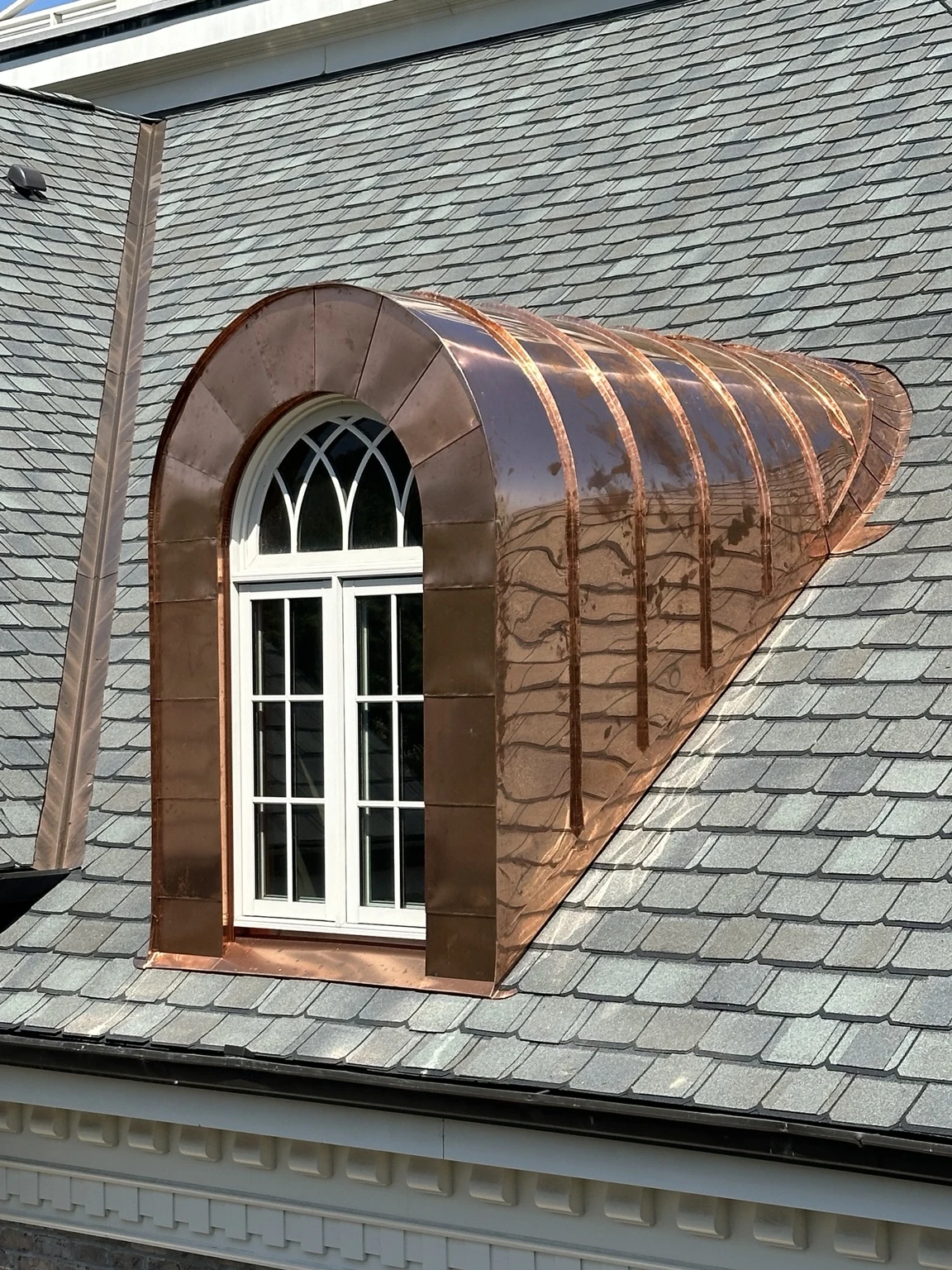
Imagine two roofs of 30 squares each. The planning allowance starts at $105,000 for either. One has broad, straightforward planes; the other has several dormers, a curved section and difficult delivery access. These are hypothetical examples, not completed jobs or actual quotations. Ask bidders to explain how those details affect cutting, staging, metalwork and time. Do not assume equal roof area means equal final cost.
07
New construction and replacement need different questions
For a new building, coordinate the intended slate roof with the design team before framing and deck decisions are finalized. For a replacement, establish what must be removed and how the building will stay weather-protected. Ask how concealed damage will be documented, priced and approved before extra work proceeds. Do not automatically assume every building needs reinforcement, or that an existing roof proves the structure suits a different slate specification.
08
Plan ownership costs without promising a maintenance-free roof
The purchase decision should include inspection, isolated repairs and eventual renewal of components such as flashings. Long-lived stone does not make every roof component equally long-lived. Compare maintenance and replacement assumptions explicitly rather than promising a guaranteed payback or resale gain. Keep the slate specification, supplier information, photographs and any matching spare slate so future repairs begin with useful records.
09
Material choices change the installed system
Slate origin, color, thickness, size, finish, sorting and testing affect price. Larger or thicker pieces may change weight, handling and labor. Blends and specialty shapes add layout work. Compare quotations using the same product specification rather than a generic line labeled simply ‘slate.’
10
Roof geometry drives labor
A simple gable is different from a steep roof with valleys, dormers, turrets, walls and many penetrations. Tear-off, staging, protection, access, roof height and site conditions can substantially affect labor. Copper valleys, step flashing and custom sheet-metal work also deserve separate attention. Location and contractor availability can affect the final price.
11
Repair and replacement are different decisions
The $3,500-per-square figure is for general full-roof budgeting, not a rate for small slate repairs. An older slate roof may need targeted repairs and renewed flashings rather than wholesale replacement. A qualified inspection should separate sound slate from failed details. The lowest initial proposal is not necessarily the lowest lifetime cost if it removes reusable material or substitutes short-lived details.
12
Where this planning figure comes from
Tim Kelly supplied the general all-in $3,500-per-square budgeting figure for this guide on October 23, 2026. The technical references below provide installation and preservation background; they are not the source of this pricing estimate. Request a current, written project quotation for your roof.